


Venkatesh Reddy
panel is working fine
output has remained stable



Lowest Price

Superior Quality

EMI
Offers & EMIs

Warranty Assurance

Genuine Products

Free Delivery

Factory-Direct Delivery

Certified Excellence

Earn WAAREE Points
Warranty Information
12 Years Product Warranty & 30 Years Power Output Warranty


12 Years Product Warranty & 30 Years Power Output Warranty.
12 Years Product Warranty & 30 Years Power Output Warranty.
12 Years Product Warranty & 30 Years Power Output Warranty.
12 Years Product Warranty & 30 Years Power Output Warranty.
12 Years Product Warranty & 30 Years Power Output Warranty
12 Years Product Warranty & 30 Years Power Output Warranty.
output has remained stable
Excellent power generation, trusted brand and great after sales service.
bought 4 panel , working good
It's a good product, but look out for similar offers on other products like this one as well... got in good prices
Solar
Best panel waaree
EXCELLENT PRODUCT AT REASONABLE AND AFFORDABLE PRICE.
HAPPY TO PURCHASE WAAREE 545 BIFACIAL PANEL. GREAT DEAL DONE. ITEM RECEIVED IN GOOD CONDITION.
Best panel with best outstanding performance
Best
What are solar modules?

Solar modules, also called solar panels, are devices made of connected solar cells that convert sunlight into electricity. They form the core component of any solar power system.
What are the types of solar modules?
Common types include polycrystalline, monocrystalline, mono PERC, bifacial, and flexible solar modules. Each type differs in efficiency, cost, and ideal use case.
How many solar panels are needed to power a house?
It depends on your electricity usage, but as an example, a typical 3kW home system needs about 5 to 6 panels if you're using 540Wp to 585Wp modules like the ones in our range. Larger homes with higher consumption may need a 5kW to 10kW system, which would mean roughly 9 to 18 panels of the same wattage.
What is a small solar module, and what is it used for?
A small solar module is a lower-wattage panel, usually under 300Wp, used for things like mobile charging, small appliances, backup lighting, or off-grid setups where you don't need a full home system.
What is the cost of a small solar panel?
Prices for small panels in our range start from around ₹1,999 for a 20Wp module and go up depending on wattage and technology. Check our small solar modules range for current pricing.
Are Waaree's small solar modules weatherproof and durable?
Yes, our small solar modules are built to handle everyday outdoor conditions, including rain, dust, and heat, so they hold up well for both home and portable use.
What is a flexible solar panel?
A flexible solar panel is a lightweight, bendable solar module that can curve to fit uneven or curved surfaces, unlike rigid glass panels. They're commonly used on boats, RVs, tents, and curved rooftops.
Are flexible solar panels waterproof?
Yes, flexible solar panels are typically sealed to resist water and moisture, making them suitable for marine and outdoor use. Check the specific product page for its exact water resistance rating.
Where are flexible solar modules best used?
Flexible panels work best on boats, RVs, campervans, tents, and curved or irregular rooftops where rigid panels won't fit or would add too much weight.
What is a mono perc solar module?
A mono PERC solar module is a monocrystalline solar panel built with PERC technology, which adds a reflective layer at the back of the cell to capture more sunlight and boost power output.
What are the advantages of mono PERC solar panels?
Mono PERC panels offer higher efficiency, better performance in low light, and better heat tolerance compared to standard panels, all in a similar footprint.
How efficient are mono PERC solar panels?
Mono PERC panels typically fall in the 20 to 22% efficiency range, higher than standard monocrystalline or polycrystalline panels.
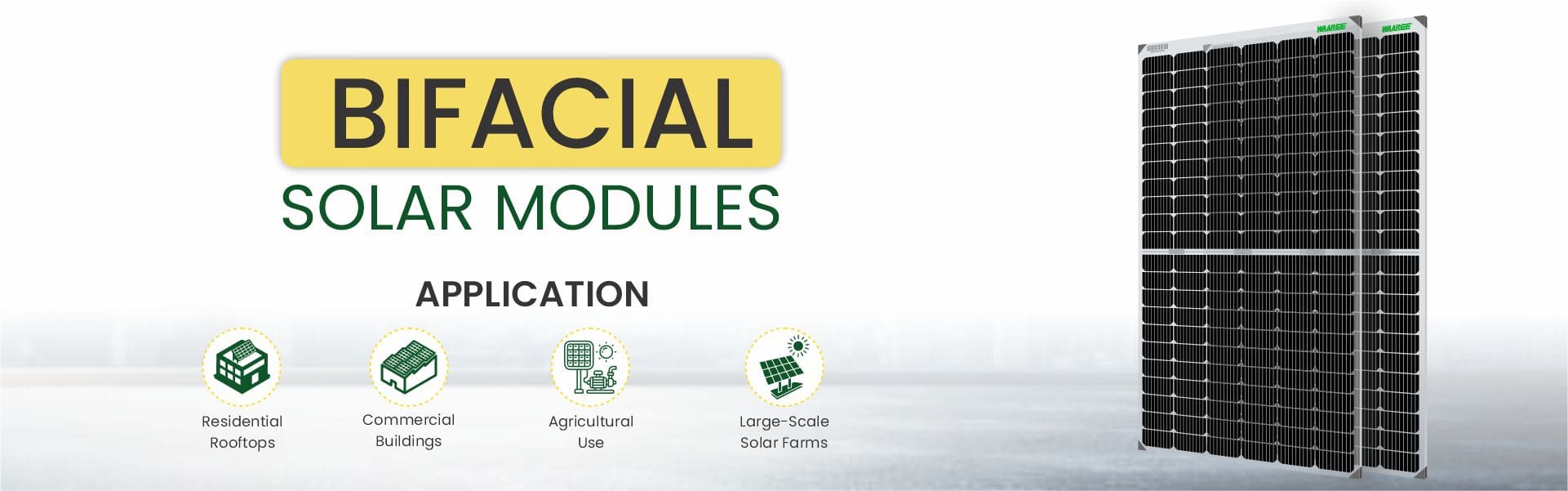
What is bifacial in solar panels?
Bifacial means the panel can generate power from both sides; the front captures direct sunlight, and the back captures light reflected off the ground or nearby surfaces.
Are bifacial solar panels better than regular solar panels?
For most setups, yes, bifacial panels generate more power per panel due to their dual-sided design, though the benefit depends on how and where they're installed.
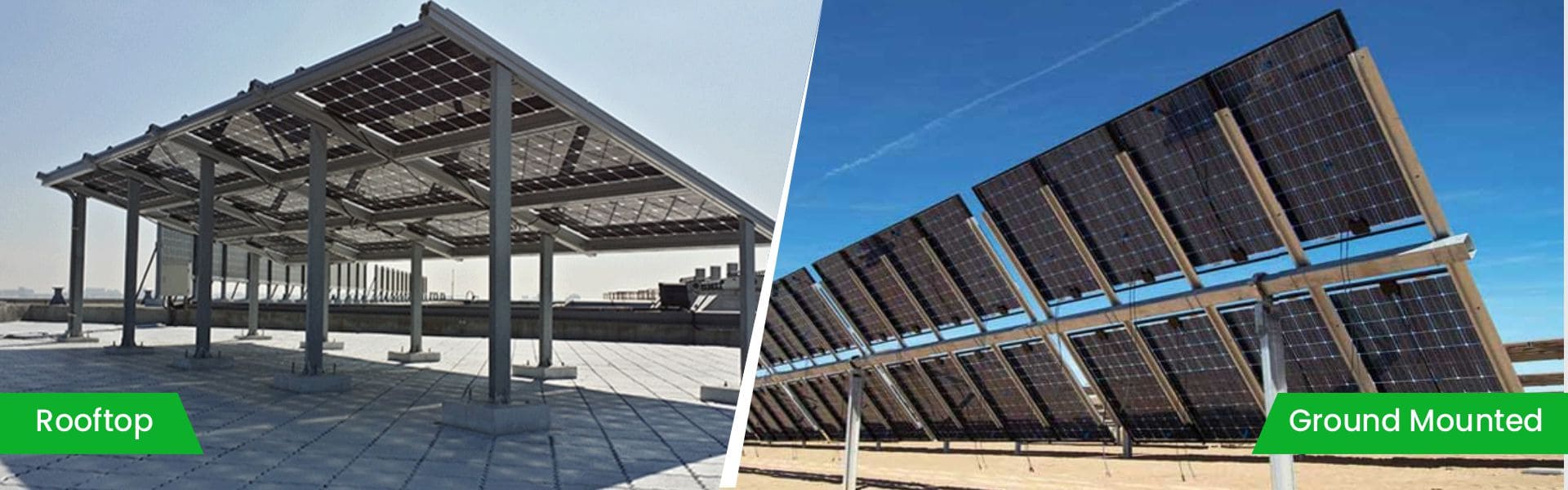
Where to install bifacial solar panels?
Bifacial panels work best on elevated mounts, ground-mounted systems, or carports, anywhere with open space and a light colored or reflective surface underneath.
12 Years Product Warranty & 30 Years Power Output Warranty.
| Column Name |

WAAREE 545Wp 144 Cells 24 Volts Framed Dual Glass Mono PERC Bifacial Solar Module |

|

|
|---|---|---|---|
| Price | ₹11,499.00 MRP: ₹14,907.11 | ₹12,199.01 MRP: ₹16,874.07 | ₹12,299.00 MRP: ₹16,874.07 |
| SKU | Bi-55-545 | BiN-08-585 | BiN-08-590 |
| Weight | 32.5 kg | 32 kg | 32 kg |
| Width | 113.3 cm | 113.4 cm | 113.4 cm |
| Height | 227.2 cm | 227.9 cm | 227.9 cm |
| Depth | 3.5 cm | 3.5 cm | 3.5 cm |
| Minimum Purchase | 1 unit | 1 unit | 1 unit |