

India is constantly moving decisively towards renewable and sustainable sources of energy, and this reflects in the nation's homeowners considering the implementation and benefits of solar power. Given the pressure of increased energy costs and a stronger push toward eco-friendly living, solar panels for home have now become a much needed investment for the future. This is where choosing the right solar panel is essential, after understanding the basic factors related to efficiency, cost, and long-term durability. If you are wondering which solar panel is best in India, the answer depends on a combination of performance, price, and the region’s climate conditions.
Efficiency of Solar Panels
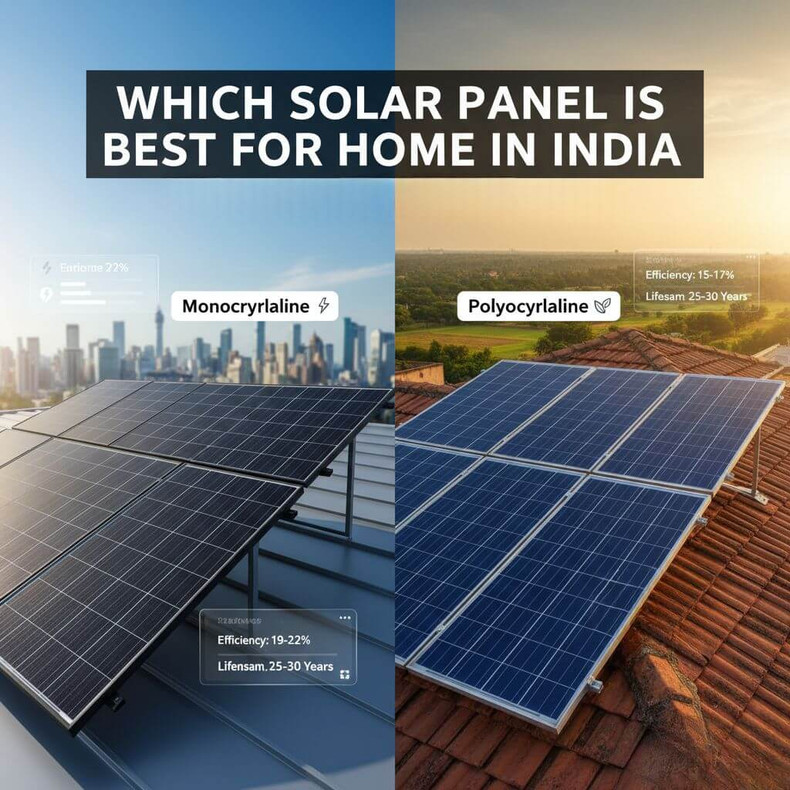
One of the main variables in choosing the right solar panel for installation at your house would be the efficiency of converting sunlight into usable electricity. Choosing panels with monocrystalline panels with higher efficiency rates of about 19-22% is ideal for urban homes with minimal roof space and higher consumption.
Polycrystalline panels are cheaper, with 15-17% efficiency ratings, and are a good pick for large rooftops with moderate energy consumption. Thin-film solar panels are lightweight and flexible but usually much less efficient, making them apt for temporary use.
Balancing Cost with Long-Term Value
While affordability is generally the number one factor, decisions should be based on the value created over time, not just the upfront price. Monocrystalline panels are a little bit more expensive but offer better performance and longer life spans of 25 to 30 years. On the other hand, polycrystalline panels are cheaper and will take up more space, probably requiring more maintenance over the years.
The selection of the best solar panels for home depends on the local climatic conditions, so in a tropical country like India, one should prefer those that work best at high temperatures. Solar panels with very low temperature coefficients will, therefore, perform comparatively better. Knowing which type of solar panel is best for home use can help balance efficiency, longevity, and affordability in the long run.
Durability and Maintenance Factors
Durability is essential when it comes to selecting the best solar panel for home use. The longevity of any home-use solar panel depends on the quality of construction, mounting systems, and resistance to environmental stress. Anti-reflective tempered glass with corrosion-resistant aluminium frames excels in high-humidity areas and coastal regions. For homeowners wondering which solar panel is good, it’s wise to look for BIS or MNRE-certified brands that offer solid warranty coverage, strong after-sales service, and proven durability over time
Setting Up the Right Solar System
All of these solar systems have their own importance, which can be distinguished as on-grid, off-grid, and hybrid systems. The on-grid systems are those that are connected directly to the main electricity grid to reduce your electricity bills by means of net metering. Off-grid systems store extra energy in batteries and act as a perfect option for remote areas where one does not have access to a stable power supply.
Hybrid systems combine both benefits: grid connection and battery backup for uninterrupted power. Brands like Waaree offer an integrated system for a fine balance between efficiency and affordability.
Which solar panel is best for home? It all depends on your energy consumption, the available rooftop area, and your budget. Go for the monocrystalline panels if you are out to maximize efficiency and space. Polycrystalline can be the cost-effective alternative, though, if you have enough space on a large rooftop. Reach out to the team at Waaree to learn more about different solar panels and pick one that best meets your needs.
Frequently Asked Questions
- How Long Do Solar Panels Last in India?
Most solar panels for home use can last anywhere between 25 to 30 years for homes, with proper maintenance and periodic cleaning.
- Which Solar Panel is Best for Your House in Terms of Cost?
To answer which solar panel is best for home, we know polycrystalline panels remain the most budget-friendly; their equivalent in efficiency is the monocrystalline panels, which can offer greater long-term savings.
- Do Solar panels work on cloudy or rainy days?
Yes, though at a reduced rate. New photovoltaic panels installed in homes are capable of generating diffused sunlight conditions.
- What does it cost to install solar panels on an Indian house?
The costs vary from system size to brand, but usually, it range between 60,000 to 1,00,000 per kW before subsidies.
- Which is the best solar panel for a house, considering limited space?
The efficiency and compactness of a monocrystalline panel make it the best choice of solar panel for home.


